
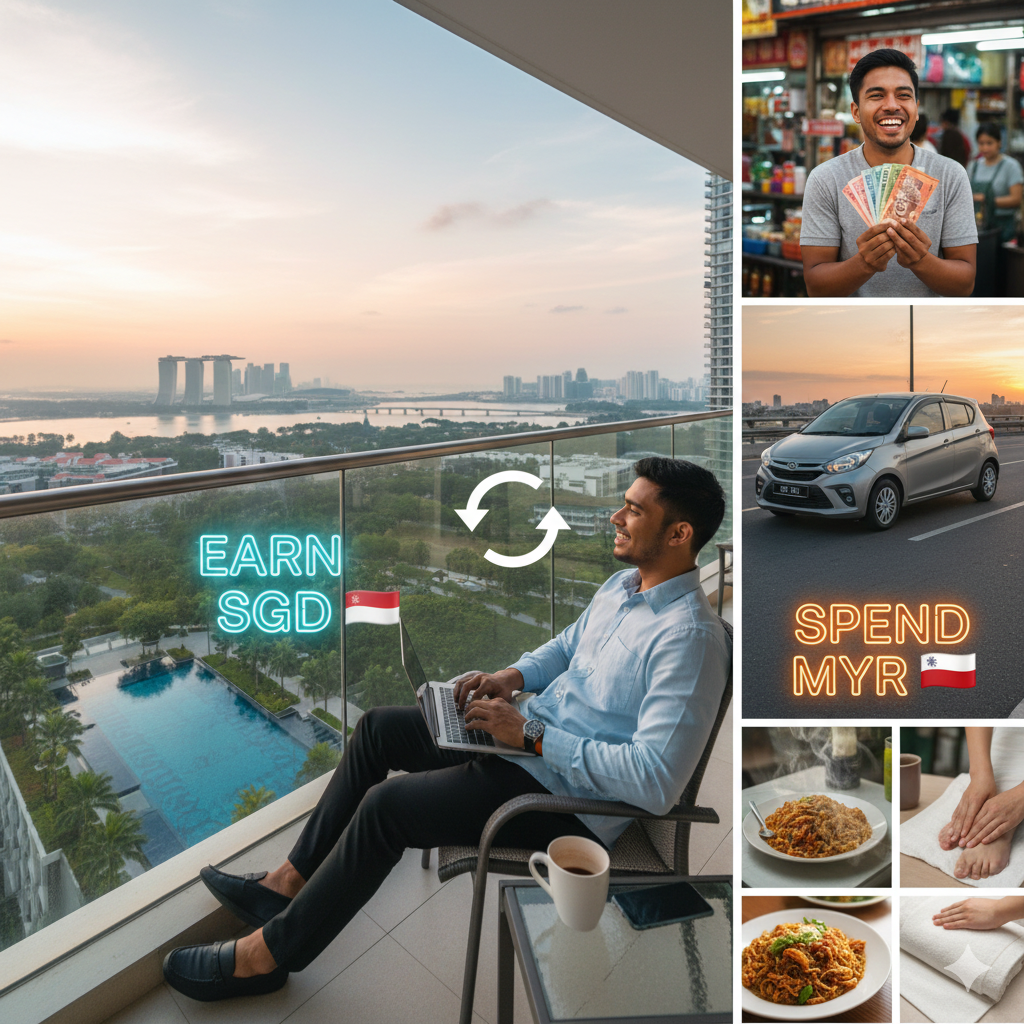
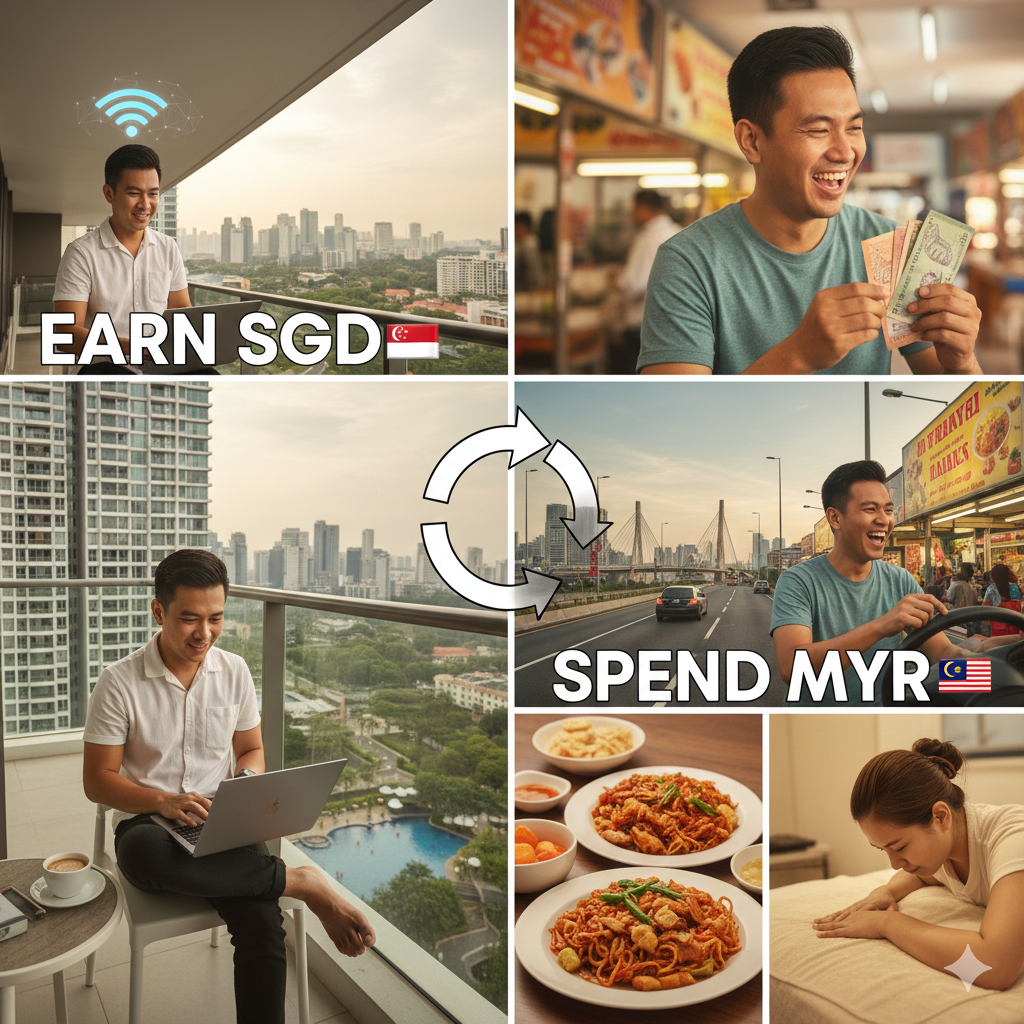
As Singapore’s cost of living climbs, many are asking: Can you work remotely for a Singapore firm while living in Johor Bahru? The short answer is yes—and it’s becoming the ultimate financial “life hack.”
The Lifestyle Upgrade The draw is simple: strong SGD vs. weak MYR. With the exchange rate at historic highs, your salary stretches further. In JB, a luxury condo costs a fraction of a Singapore HDB rental, and groceries are often 50% cheaper. Beyond savings, you gain a slower-paced lifestyle and “landed” space that is unattainable for many in Singapore.
The Tech & Proximity JB’s infrastructure is remote-work ready, featuring stable broadband and expanding 5G. Since you can literally see Woodlands from Johor, popping back for meetings is easy—especially with the RTS Link opening in late 2026, which will zip passengers across in five minutes.
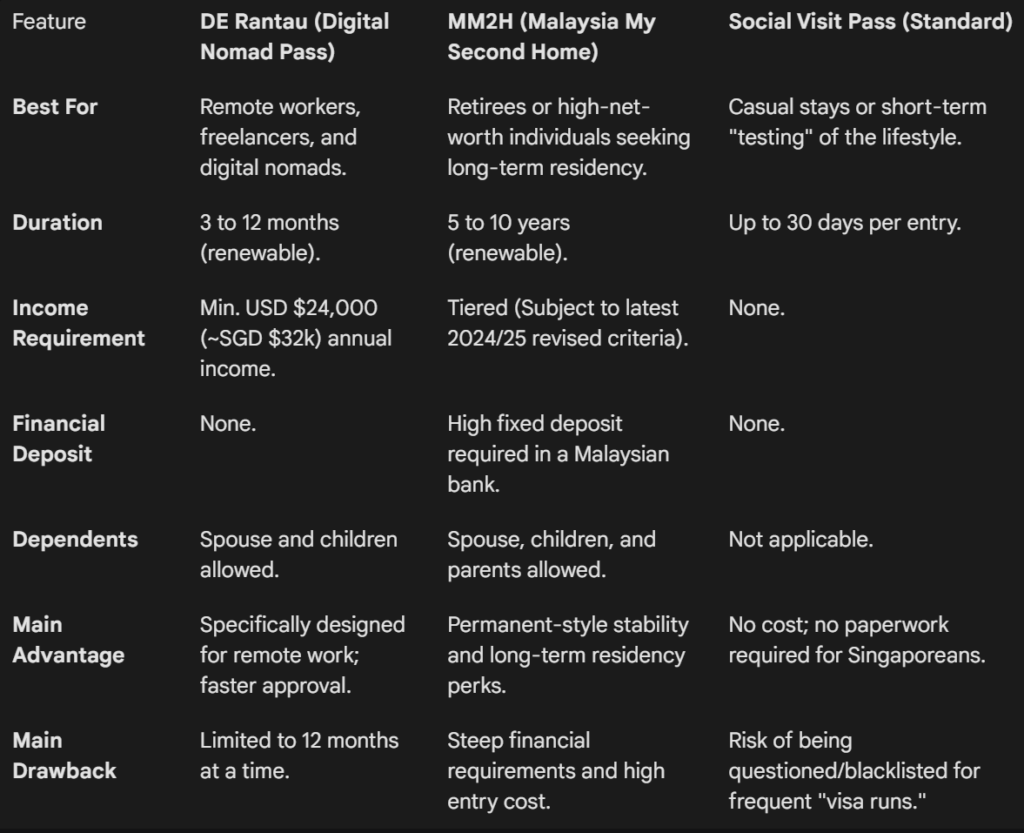
Legalities & Logistics To stay long-term, avoid “visa runs.” Instead, look into the DE Rantau (Digital Nomad) pass or MM2H program. While you must navigate Causeway traffic and potential employer hesitation, the trade-off is clear: Singapore-level income paired with JB’s affordability. For the proactive Singaporean, JB isn’t just a weekend getaway—it’s a strategic home base.
In 2026, the dream of earning a Singaporean salary while living in a Johor Bahru (JB) condo is more popular than ever. But as many early adopters have discovered, it is not as simple as “choosing a cheap house.” Between immigration “visa runs,” tax residency rules, and the mental shift required, moving across the Causeway is a strategic maneuver that requires careful planning.
The “Visa Run” Reality: Customs and Caution
The most common question Singaporeans ask is: “Can I stay in JB indefinitely on a tourist pass?” Technically, Singaporeans can enter Malaysia visa-free for up to 30 days. However, the “visa run” strategy—staying 30 days, crossing to Singapore for a day, and immediately returning—is increasingly risky.
In 2026, Malaysian customs have become significantly more vigilant. Many who try to stay “forever” without a proper pass report receiving verbal warnings. Some officers might ask you to stay out of the country for at least a week, while others might even make a handwritten note in your passport to flag your frequent entries.
For those who cannot afford the MM2H (Malaysia My Second Home) program, the struggle is real. Communities of Singaporeans in JB often swap tips to manage this stress:
- The 2-Week Rule: Instead of staying the full 30 days, some exit after 14 days and stay in Singapore for at least 3 days before returning.
- The E-Gate Advantage: Using the bus e-gates (which don’t involve physical passport stamps) is often smoother than the manned car counters, though immigration still tracks your digital footprint.
- Overseas Breaks: Taking occasional holidays to Batam, Thailand, or Vietnam to get a non-Singaporean entry stamp can help “reset” your pattern.
The Financial Life Hack: 10x Savings?
The math remains the biggest pull factor. In 2026, three of the “big ticket” expenses for any Singaporean—housing, cars, and medical bills—can be drastically lower in JB.
| Expense Category | Singapore (Approx.) | Johor Bahru (Approx.) |
| Landed House | S$3M – S$5M | RM 450k – RM 800k (S$135k – S$240k) |
| Car (Entry Level) | S$150k (incl. COE) | RM 35k – RM 60k (S$10k – S$20k) |
| Annual Road Tax | S$600 – S$1,000 | RM 6 – RM 90 |
In special zones like Medini, foreigners can buy property without the usual RM 1 million price floor. You can find modern two-bedroom condos for as low as RM 285,000 (approx. S$86,000). For a Singaporean who rents out their HDB for S$3,500 a month and lives in a JB condo for S$600, the “retirement” starts immediately.
Safety: Perception vs. Reality
Safety is a polarized topic. While Singaporean media often highlights car break-ins in JB, residents argue that crime is exaggerated. Some point to the high suicide and stress rates in Singapore as a different kind of “danger.”
In 2026, JB has seen increased police presence (the “Visit Johor 2026” campaign), but common-sense precautions remain: don’t flash valuables and stick to gated communities. For many, the “safety” of a slower-paced, less-stressed life in JB outweighs the petty crime risks.
Strategic Residency: Beyond the Tourist Pass
If the constant border-hopping becomes too stressful, there are legitimate legal routes:
- DE Rantau (Digital Nomad Pass): Costs roughly RM 1,000 and allows stays of up to 12 months for those working for overseas companies.
- MM2H (2026 Tiers): Now more structured with a “Special Economic Zone” tier specifically for areas like Medini and Forest City, offering a 10-year visa for a lower fixed deposit (approx. USD $32,000 – $65,000 depending on age).
- Medical/Dependant Visas: Often overlooked, these can be options for those with family ties or long-term medical needs in Malaysia.
The Verdict
Living in JB while working for Singapore is a “best of both worlds” scenario, but it isn’t “set and forget.” You must be prepared to manage your visa status proactively, handle the occasional customs questioning, and adapt to a different pace of bureaucracy. For those with the mental capacity to navigate these hurdles, the reward is a quality of life—with space, cars, and savings—that is simply impossible on a similar budget in Singapore.